Tasmanian councils have launched a Shared Blueprint for Climate-Healthy and Resilient Communities, a statewide initiative funded under the Tasmanian Government’s Healthy Focus Grant Program.
The project, “Tasmanian Councils Supporting Climate-Healthy and Resilient Communities”, aims to provide the pathways to safeguard health and wellbeing as climate change intensifies risks from heatwaves, bushfires, floods, and storms.
It is accompanied by a Technical Report which provides the evidence base for the Shared Blueprint.
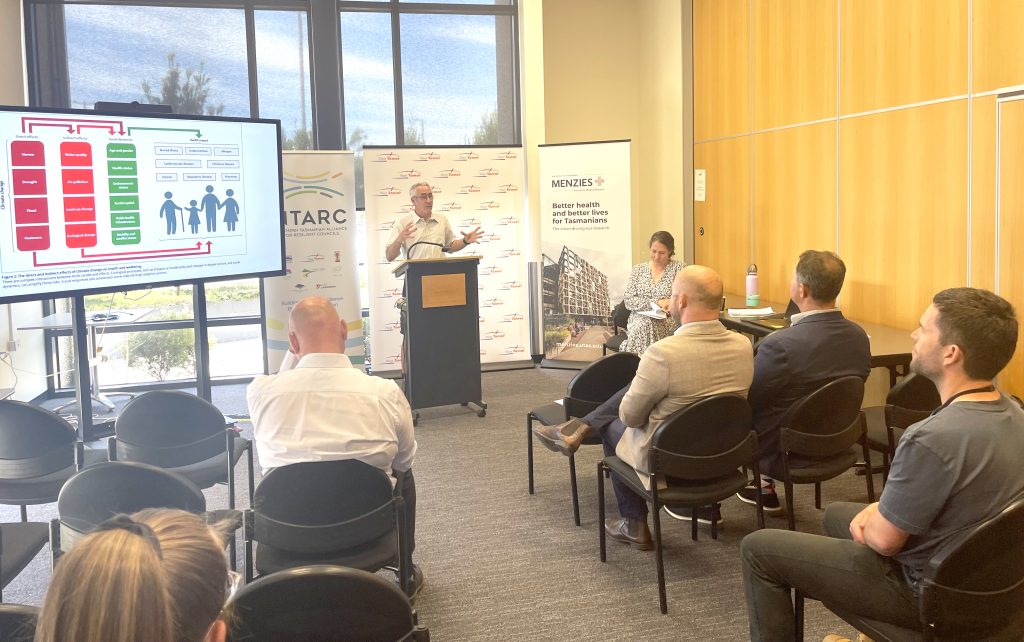
The Shared Blueprint, and Technical Report’s development was led by the Northern Tasmanian Alliance for Resilient Councils (NTARC) in partnership with the Department of Health and the University of Tasmania’s Menzies Institute for Medical Research, along with climate experts.
It is one of the most comprehensive local government climate-health engagement processes undertaken in Tasmania to date which included:
• 21 councils engaged statewide
• 10 regional workshops
• 100+ participants
• 400+ coded insights
From these three system-wide themes were identified as being critical to our communities and councils in the face of the changing climate:
• Leadership and governance
• Healthy and climate ready settlements
• Social resilience and equity
These findings shaped seven principles to inform the integration of climate and health into everyday council governance and operations, and a roadmap to guide implementation.
This Shared Blueprint is essential as research by the UTAS Menzies Centre found that climate change is already impacting Tasmanians’ health:
• Heatwaves increase mortality by up to 9% during prolonged events.
• Bushfire smoke causes an estimated 4 additional deaths annually, plus 18 hospital admissions, costing the health system over $16 million in mortality costs each year.
Whilst climate risk assessment undertaken by NTARC found that:
• Mental health strain from repeated disruptions and climate anxiety is rising, particularly in rural and regional communities.
• Food and water security risks are increasing due to disrupted supply chains and changing rainfall patterns.
Mayor Christina Holmdahl, West Tamar Council, said:
“Councils are intrinsically impacted by the effects of climate change – more so that any level of government in Australia. This blueprint will provide local government with the tools and partnerships required to protect community health and resilience now and for generations to come.”
John Brown General Manager Break O Day Council and NTARC Chair, said:
“This is about turning evidence into action. Councils already have the systems and skills—we just need stronger connections and shared frameworks. By working together, we can scale what works and makes resilience a built-in outcome, not an afterthought.”
Katrina Graham, Northern Tasmanian Alliance for Resilient Councils, Program Manager, said:
“We are listening and responding to the experts who are telling us that climate change is impacting our communities and their health. Heatwaves, smoke events, and disrupted services are already affecting Tasmanians’ health. Working across councils to embed health into our climate adaptation efforts can save lives, reduce illness, and strengthen wellbeing across the state.”
Dr Sharon Campbell, Menzies Institute for Medical Research, UTAS, said:
“Our research shows the health impacts of climate change are real and growing. This Blueprint aligns science, policy, and local practice, creating a system where councils can act confidently in partnership with the Tasmanian Government and research sector to support communities to thrive despite a changing climate.”
The Shared Blueprint calls for aligned governance, investment in capability, shared data systems, and long-term commitment. It emphasises collaboration across councils, government, research, and community sectors to build climate-ready settlements, protect nature, and put health at the centre of planning.